3 min read
A woman in Lagos sees a beautiful dress on Instagram. Perfect fit, perfect price, ships in two days. She also seen three posts this month from people who paid for something similar and got nothing. So she does what most Nigerians online do now she hesitates, screenshots the page, asks around, checks the comments for complaints and maybe never buys at all.
This is the environment every honest business owner is now selling into. It doesn't matter that you've never scammed anyone in your life. The scammers before you have already done the work of making your future customers suspicious and you're the one who has to undo it. This is unfair, but it's also just the reality. The businesses that figure out how to earn trust quickly are the ones that win customers who would otherwise have walked away. Here's what actually works.
Understand What You're Fighting
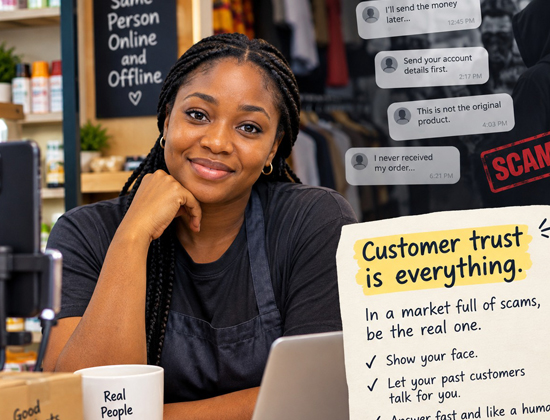
Nigerian online buyers have learned specific red flags from bitter experiences: no verifiable address, no reviews, pressure to pay immediately, prices that seem too good, accounts created recently with few posts, sellers who only accept transfer and disappear after payment. Every one of these has burned somebody. The goal isn't to convince people scams don't exist. It's to show, quickly and clearly, that you are not one of the patterns they've learned to fear.
Show Your Face From Time To Time
Anonymous pages selling anonymous products are the first thing people distrust now. If you're the owner, appear in your own content; sometimes packaging orders, at your shop attending to customers or talking about your products. A real human face attached to a business does more for trust than almost anything else you can post. If you have a physical location, even a small one, say so and show it. "We are located at No 1, Some Place, Lagos" reads completely differently from a page with no address anywhere.
Let Old Customers Speak for You
Don't just say "we're trusted." Show it. Screenshots of real customer chats (with permission from the customer and names blurred if needed), short videos of customers unboxing, tags from people who bought and are happy. These carry more weight than any claim you make about yourself. If a customer compliments you unprompted, ask if you can share it. Most people will say yes.
Be Boring and Consistent With Delivery Information
Scammers rush people. Honest sellers explain. Be specific about delivery time frames, what happens if a customer isn't home and what your return policy actually is, even if the answer is no returns on this item, state the reason. Customers trust specificity. Vague answers to simple questions are exactly what scam page sounds like when it's stalling.
Offer a Small Way Out
Where you can, give a low-risk first step: a smaller trial size, pay-on-delivery for local buyers or a partial deposit with balance on delivery. Not every business can do this for every product, but even offering it for first-time customers signals that you're confident enough in your product to let them verify before fully committing.
Answer Fast, Especially the First Message
The speed and tone of your first reply often decides whether someone trusts you enough to pay. Slow, robotic, or copy-pasted responses feel like a scam operation, running many pages at once. A quick, specific, human reply, one that references what they actually asked signals a real business with a real person behind it.
Keep Your Complaints Visible, Not Hidden
It's tempting to delete every negative comment. Don't. A page with zero criticism ever looks manufactured. What builds real trust is showing a complaint and your response to it, how you handled a wrong size, a late delivery, a damaged item. Customers don't expect perfection. They expect to see how you behave when something goes wrong, because that's the moment that actually matters to them.
Make It Easy to Verify You Exist Outside the App
CAC registration, a Google Business listing, a consistent presence across platforms, a phone number that actually works and have someone responding when calls come in. None of these are exciting, but each one is a small piece of proof that you're not a page that will vanish next week. Scammers rarely bother with this level of paperwork because they don't plan to stay.
Finally, trust isn't built in one post or one transaction. It's built the same way a market woman builds a reputation over the years by being the same person every single time, by keeping her word on small things, by being findable when something goes wrong. Online, that reputation just has to be built faster and more visibly, because your customer can't walk past your stall every day to watch you work. Every honest interaction is doing double duty right now: it's serving the one customer in front of you, and it's slowly proving to everyone else that not every seller online is trying to disappear with their money.
That's a heavier job than business owners had to do a generation ago. But it's also an advantage. In a market full of scams, being consistently real is one of the few things that still can't be faked for long.